Showing posts with label healthy living resources. Show all posts

Sunday, March 12

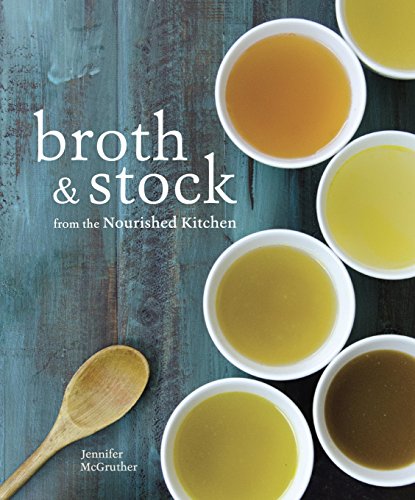
Broth & Stock (A Review)

Broth and stock are big buzz-words in the food community these days, both among nutrition advocates and trendy 'foodie' types. Broth & Stock skips the hype and takes an accessible, down-to-earth approach to demystifying why these ancient foods have suddenly become a Big Deal again and how the average person can (easily) incorporate them into their life and diet.

McGruther blessedly starts with the basics, all well written and long enough not to feel rushed but short enough not to wax imposingly lyrical, either. The book's intro covers: a brief history of broth/stock, the differences between the two (and why they matter or don't), how to choose bones for making your own (and where to find them), and what you'll need to make and store them (ingredients and equipment).

The book then becomes essentially a top-notch primer on how to make and use broths, bone broths, and stocks. It starts with a comprehensive list of “master” stock recipes, which includes traditional standards (chicken, beef, etc.) and less common but equally versatile variations (mushroom, sea veggie, kitchen scrap). Everything that follows is either a recipe for how to use the broths/stocks you've made (because it's no good making it if you don't know what to do with it!), or a fun/helpful fact or side note on related topics.

This might be worth a flip-through just for new tips and ideas if you're already an experienced stock/broth maker. But it will – by far – be of the most value to anyone new to the subject looking to improve their health or cooking ability by harnessing the power (and delectable flavor boost) of bone broths.

Monday, June 27

Sunscreen That Won't Make Your Skin Crawl

Okay, another short post today of stuff that's just randomly been on my mind. Today's topic: Sunscreen.

I'm not going to rant about the nasty crud stuffed into most commercial sunscreens, or wail about how sunscreen causes cancer – honest. All I'm here to do is point you in a helpful direction if, like me, you struggle to find a sunscreen that: 

(a) Isn't full of scary things;
(b) Doesn't feel horrifically gross and make your skin crawl; and
(c) Can consistently be easily found/ordered/purchased.

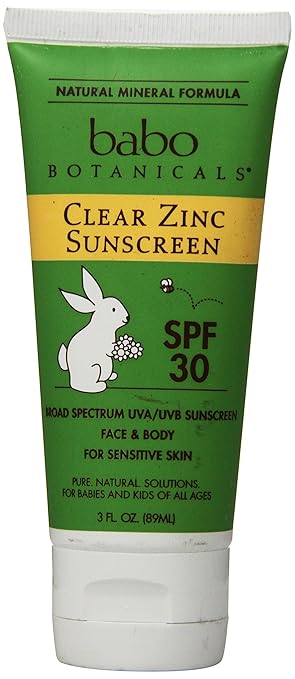
After lots of research and some experimentation, I'm officially a fan of Babo Botanicals Clear Zinc Sunscreen (SPF 30).

(This is not a sponsored post. Just trying to save other people time and energy I wish I hadn't had to invest in this project.)

Anyway, long story short, this stuff is clean, won't bother your skin (even if it's sensitive), and can be conveniently ordered from Amazon if your local grocery store doesn't have it. (Note: Lots of them do.) It's not quite as durable as some of the other stuff out there – you'll need to reapply if you're spending all day in the sun, but for me that's a fair tradeoff.

Is sunscreen something you worry about?

Thursday, March 3

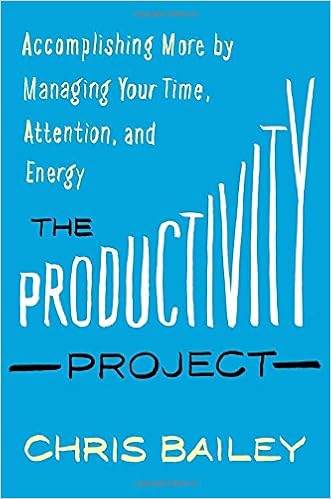
The Productivity Project

Everyone is busy, all the time – or at least so it seems, these days. As a result, maximizing productivity to make the most of our time is, not surprisingly, a huge source of public interest.

Openly obsessive about productivity, author and blogger Chris Bailey turned down several high-paying job offers to spend a year exploring and experimenting with the subject of productivity to find out what really works and what's just hype. Initially, he chronicled his experiences on his blog. When his year-long experiment ended, he culled the best and most valuable findings from his work and turned them into a book: The Productivity Project.

Clearly written by someone who values efficiency, the book walks a neat line, being fluidly easy to read while still concise and extremely well organized. Every chapter starts with an 'estimated reading time' and a clear statement of the key takeaway (which I loved), and ends with a short, highly relevant “exercise” to help readers implement what they've learned. Bailey strikes a valuable balance between research and personal experience, reminding readers that despite some universal truths (we each only get 24 hours a day) every person and situation is unique, so our individual solutions may be too.

I found myself constantly flagging pages to come back to and chew on again, and will definitely be rereading this and recommending it to others. Far and away my favorite part was the author's emphasis on the fact that all productivity improvements come down to manipulating one of three core components: time, attention, and energy. This simple but high-impact framework really (and positively) changed how I looked at a lot of things I've been doing and gave me valuable direction for future choices.

Friday, September 4

The Value of Afternoon Tea

We don't watch much tv, but we've long appreciated British television when we've had a chance to sit down and view something. We've particularly enjoyed Dr. Who (of course!), Are You Being Served, and Fawlty Towers.

You can't watch British television and fail to notice that they are as obsessed with tea as Americans are with coffee. But it's not an even trade-off: the behavior patterns, attitudes, and atmosphere surrounding tea are far different than those around coffee. Where coffee is a "go-go-go" and survival drink in many circles, tea suggests more refined pacing, calmness, and re-orientation. 

Is it any surprise, then, that there is a TED talk suggesting that Afternoon Tea Could Save the World


The video isn't very long, but absolutely worth watching. I, for one, was well persuaded that I just might need to start incorporating afternoon tea into my life this Fall/Winter!

If you find yourself thinking the same, here are my best tips on making great tea:

- Not all tea is created equal! Consider splurging just a tiny bit on good tea, and you'll notice a huge difference in the overall experience. 

- Loose leaf tea tends to be fresher than bagged, and gives you the opportunity to enjoy an awesome tea ball besides! (Seriously, you can get tea balls in every shape and size from a TARDIS to a rubber ducky and everything in between!) I love to order my tea from Whistling Kettle, but I've also heard great things about the selection at Mountain Rose Herbs. Of course, if you have a Wegmans, you're all set - check out their awesome gourmet loose leaf tea options in the organic section. 

- Brew time and temperature matter. Be sure to read the brewing instructions that come with your tea!

- Don't assume that you must have something sweet and highly caloric with your tea (despite the photos of beautiful cupcakes in the video). If you do decide to indulge, keep the portions small and try to reach for options that offer satisfaction rather than trigger cravings (think one or two butter-heavy shortbread, or even proper British "digestive biscuits".)

What do you think? Could tea have the power to change the world? Or at least change your world? 

Thursday, January 22

Nourished Kitchen: Book Review


So I'm one of those crazy people who has been known to read cookbooks like novels. I am also the weird type who sits plasters little sticky notes and scraps of paper between the pages of cookbooks marking everything that looks amazing. The number of little paper flags quickly becomes a visual measure of how good the book is. 

In that respect, the Nourished Kitchen cookbook rapidly achieved rock star status. Not only was it incredibly beautiful to look at and well laid out, but it was all real food! (Little paper flags abounded from start to finish.)

This book is chock full of recipes that perfectly balance unique with healthy and practical. Most of these recipes were new to me, or creative new spins on old standbys, but they are entirely based on standard ingredients that can be easily accessed - even for those of us with limited access to specialty items. If you've got a farmer's market or decently stocked grocery store nearby, you're all set! From unusual options like Skyr and Bone Marrow Custard to seasonal glories like Cider Braised Chicken or Melted Blueberries with Ginger and Orange, I cannot wait to cook my way through this book. The author's humble, friendly writing style was wonderfully refreshing as well.

If you're looking for some fresh ideas in real food or just some kitchen inspiration during the long, dark days of winter, I highly recommend this. [It's new on the market, but your library should have a copy!]  You can also check out the author's Nourished Kitchen blog for other great recipes and ideas.

Friday, January 16

Coconut Oil Hair Mask

You've probably seen the DIY Hair Mask ideas floating around Pinterest and the interwebs in general. I have too, but I never bothered to try one until this past week. I dyed my hair a couple times last year, first for ComiCon and then because I really wanted to go purple for the summer.

(Tip: If you want an unnatural color like purple, unless you are naturally platinum blonde, get it professionally done and understand that it will not last!)

My hair doesn't like dye much in the first place (which is why I had been using henna-based coloring), and I a super simple method from Made2Style. An hour later, my hair felt amazing! So incredibly soft.
ended up completely frying it. When I got the layers cut in, I lost a lot of length that I very much want back. So, with my husband's encouragement, I finally made time to give a hair mask a try. I picked

I will definitely be adding this to my weekly routine. If you've been ignoring or skeptical of this idea, I highly recommend you give it a try - it's cheap, it's clean, and it works!

Wednesday, December 31

Help For Your New Years Resolutions

I have two awesome TED Talks to share today that might prove worth pondering for anyone formulating New Year's Resolutions. 


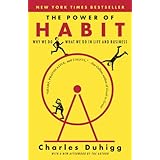
The other resource I can't neglect to mention - for people really committed to being successful - is the book The Power of Habit. The author does a great job of explaining why it's far more powerful to invest our energy in the slow, steady process of building good habits to change our lives than to expect to be able to make something happen solely through sheer will power. Hint: Your brain likes to automate things - and once they're automated, you stop needing will power and just do them


Have a safe and happy New Year's Eve!!

Monday, December 22

Fun With Fats: Rendering Lard

Seemingly ages ago now (sorry for the lack of posts - busy!!), I stopped at the Farm where we get our milk and eggs. As I was piling things on the counter, my eyes lit up. There was something wonderful in the freezer case that had never been there before - leaf lard!!

(For those of you who are not crazy foodies, lard is rendered pig fat. Leaf lard is considered the highest grade, and is excellent for frying and for making decadent, flaky baked goods like biscuits or pie crust. It doesn't have any "pork" taste to it - just a beautiful, neutral flavor and creaminess.)

The lady at the Farm was super nice about my excitement, and said that although she'd never used it personally, people had been asking so she started putting it out. Yay!! 

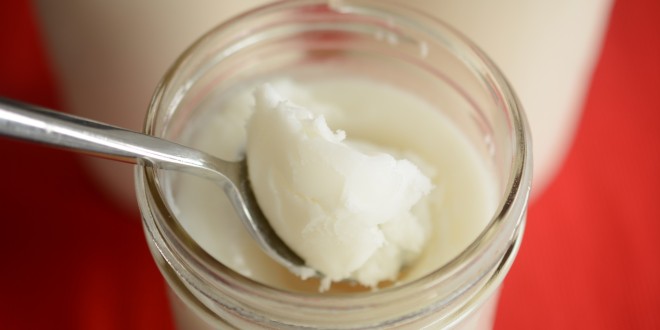
Photo from Caveman Keto site
Obviously, I snagged myself a package to play with. Since the only stuff previously available to me was the hydrogenated crap at the grocery store, I'd never had a chance to actually cook with lard, but I've been reading lots about it and couldn't wait to try. The Caveman Keto site was nice enough to have a very simple, well laid out tutorial on how to render lard. It smelled very yummy while melting down (a someone-has-a-roast-in-the-oven kind of smell), and was beautifully clear and rich when done. 

I stuck it in the fridge, and have been happily using it to cook potatoes (and a few other things) ever since. I have been amazed at how far it goes! A little goes a very long way, and cost-wise it comes in at less than coconut oil! It coats beautifully, is fully safe to cook at high temperatures with, and provides your body with a different range of nutrients than coconut oil, butter, or olive oil. I am very happy to have made this part of my cooking, and am keeping my fingers crossed that it continues to be available!

*Important Notes*
Please keep in mind that you should only use lard from pastured, organically raised (with or without official certification) pork. Toxins and other nasty things concentrate in fat - in both people and animals!! Fat from standard, commercially raised pigs will be chock full of nastiness you don't want to eat! 

Also, remember to check the label on any lard you see in the grocery store - if it has been hydrogenated (even partially hydrogenated) it is inedible! Horrifically bad for you - put it back down and walk away!

Monday, September 22

"Sleepy Dust" and Other Miracle Cures

I love Pinterest. It was practically made for visual learners like me, and has been a God-send in terms of reducing clutter and organizing ideas, materials, recipes, and inspirations.

Still, I sometimes find myself wishing that there was a way to stamp warnings on other people's pins. I'd slap "Caution: Does Not Work" signs on that stupid pin that suggests you can use Parmesan cheese container caps on canning jars (I have yet to find a brand for which this is actually true). "Requires Artistic Talent" should go on about half of the DIY wreaths, furniture painting tutorials, and party food posts. Most importantly, however, the nutritionist in me is convinced that there needs to be a "Not Necessarily/Highly Conditional" warning tag on so many of the DIY "miracle cure" style posts that circulate among the nutrition, holistic health, and herbalism themed boards. (Actually, it might be really fun to have a "Danger, Will Robinson!" sign to stick onto things that are really, truly ludicrous, too...)

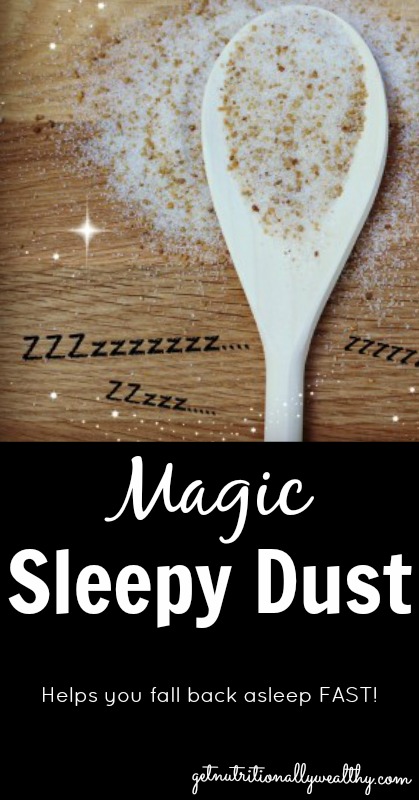
My sister is a nurse, and recently sent me a pin for something called "Sleepy Dust." She wanted to know if it jived with what my (holistic/whole foods) nutrition books say, since it definitely didn't match up with what her medical books and experience tell her.

According to the pin (and blog post it's linked to), "Sleepy Dust" is a combination of sugar and salt that you can keep beside your bed and stick on your tongue before bed or when you wake up in the middle of the night to help you get to sleep (or back to sleep). The author of the post explains why she thinks this works, and raves about how awesomely it has worked for her.

Unfortunately, if you actually read the post, red flags start popping up almost immediately. The post blames stress hormones for creating insomnia, despite the fact that there are dozens of potential causes. Too much sugar before bed (causing blood sugar issues), eating too heavy a meal too late (causing your body to be funneling energy into digestion instead of the restorative processes it is supposed to be focused on during sleep), disturbed sleep cycles (a huge issue in the modern era), and conflicting signals (such as light, particularly from electronics) are all documented to disrupt sleep. Obviously, you can't implement an effective solution unless you look at and address the source(s) of individual insomnia cases!

Then there's the reality that historically, people didn't necessarily sleep through the night. In pre- industrial eras, it was common for people to wake up in the middle of the night for an hour or two. Records demonstrate that people were accustomed to using the time to meditate, pray, or snuggle with their spouse, and then consistently fell asleep again until morning. So what looks like insomnia to modern eyes, so indoctrinated by corporate schedules, is not necessarily an unnatural or inappropriate sleep cycle.

Finally, the human body technically never needs straight sugar (beyond what you would get in a primal-style high fat, lean protein, and fibrous veggie diet). You also can't just "get rid of" or "turn off" stress hormones - they have to be physically processed and released/removed from your system. 

Although I am eternally grateful to live in an era in which so much wisdom and so many creative solutions are available to us with only the clicking of computer keys and the magic of Google, it is critical to remember that humans are biochemically and environmentally unique. Your body and your environment are not necessarily the same as the those of the person/expert/resource first to pop up on your screen. This is particularly true when pursuing secondary sites like Pinterest, where you can't really gauge the quality of information until you've gone to the source and done some digging. If something sounds too good to be true, it probably is, and just because it worked for someone else doesn't mean it's right for you. Look, experiment, and enjoy, but remember that on the interwebs, as in ancient Rome, Caveat Emptor applies -  it's your responsibility to be aware and do the fact checking necessary to make sure the solutions, tips, and tricks you find are actually safe and scientifically sound!!


Friday, September 12

The Order of the Good Death

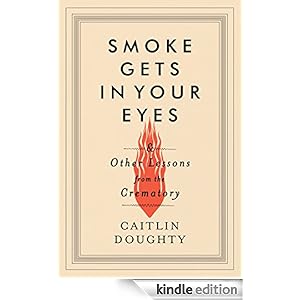
I had the opportunity to check out an advanced reader's copy of Smoke Gets In Your Eyes by Caitlin Doughty, and loved it.

Ms. Doughty (now a mortician) tells the story of her first job working in a crematory - and all the bizarre, unexpected, and thought-provoking realities it brought her face-to-face with. In the process, she takes a good hard look at traditions and misconceptions surrounding death, modern American experiences as shaped by the entire industry built around death, and how our current unhealthy relationship with death is damaging to us individually and as a culture. It was fascinating, and absolutely something I think everyone should read. Ms. Doughty has an excellent writing voice and, although it may not be the lightest book you read this year, it will certainly open your eyes (as it did mine) to some important considerations you probably never considered (but will be glad you do).

As part of her campaign to improve Americans' relationship with and handling of the natural part of the human life cycle that is death, Ms. Doughty founded the Order of the Good Death. In addition to fascinating death-related blog posts on topics ranging from medieval "corpse toilets" to modern laws and best practices to consider when someone you love dies, the website features Ms. Doughty's "Ask a Mortician" video series. Not the least bit squeamish, she readily delves into entirely practical questions like "what happens to titanium hips and breast implants when you cremate a corpse?" and "can caskets really explode?".

I highly recommend taking a few minutes to browse this fascinating site, and picking up her book if you can.

Sunday, January 12

The Calorie Conundrum

ABC News trumpeted the "good news" this week that "2010 Pledge by Food Companies Results in Reduced Portion Sizes, 6.4 Trillion Fewer Calories - Already 4 Times the Pledged Reduction!"

Apparently, 16 major food companies took a pledge in 2010 to cut 1 trillion calories out of their products by 2012 and 1.5 trillion calories by 2015. The well-known, philanthropic Robert Wood Johnson Foundation agreed to hold the companies accountable, and paid for researchers to keep track of their efforts. It's representatives joined ABC in celebrating the coalition's recently announced accomplishments.

As someone who is passionate about food, has worked in the food industry, and was taught critical thinking skills (thank you Mom & Dad!), I have not yet been able to decide if this news makes me want to laugh, roll my eyes, or bang my head against a wall. I'm thinking of sticking with the very healthy response standard to my ISTJ personality type which, as Mark Gungar so eloquently puts it, is to "decide they're wrong and get on with my life."

Before I do, though, I would just like to explain (for the benefit of anyone less inculcated with how the food world works, as the RWJ Foundation apparently is) why this "good news" is anything but. 

When I was a young, naive new manager fresh out of college, a chef I once worked with (who was completely talented and amazing) explained to me that there are two things every food service organization loves to add to food: air and water. Why? Because they're free. Prime examples are things like whipped cream cheese, whipped yogurt, smoothies, or mousse-based desserts, or puff pastries. By whipping or blending in air and water (often in the form of ice), you create a product that looks larger than it is and sell people less actual product for the same amount of money (or more, if you have good marketers!), thus raising your profit margins.

(Incidentally, as products like soy and corn have been steeply subsidized by government funds to the point that they cost almost nothing, new products like soy protein isolates, corn syrup, and "vegetable" oil have been added to this list, which is why they now show up in almost everything.)

Food companies certainly weren't about to substitute higher calorie ingredients with healthier, lower-calorie, more expensive options when they could just whip or puff in a little extra air and water and still hit the standards set for them. By challenging food companies to reduce the calories in their foods, the RWJ Foundation and its collaborators essentially handed them carte blanche to raise their profit margins and give consumers less value for their dollar! Of course they've met their goals ahead of schedule - who wouldn't want to capture the new profits as quickly as possible?

As for the portion sizes, any one who's ever read the side of a food package can tell you that these numbers are entirely made up and unrelated to real life. When is the last time you opened a box and carefully counted out the four or five crackers typically considered a standard serving size according to the packaging? If you're like the majority of the population, probably never. Unless food has been packed in single-portion servings, the amount the an individual will actually eat has not changed at all - only the numbers printed on the side of the box.

Ultimately, though surely well intentioned, the challenge to food companies to cut calories was deeply misguided. All calories are not created equal; simply cutting calories does not inherently make one healthier. While it can be helpful to monitor one's calorie intake to maintain a balance between what we take in and what we burn off, it is the quality of those calories that determines whether or not a person is going to be healthy and have a body equipped to fight off disease, heal itself when injured, and maintain the brain functions necessary to learn, focus and make good decisions.

It is regrettable that foundations seeking to improve health, particularly for the undeserved and at-risk populations in our nation, are spending their time and money working with Big Food to slightly manipulate processed food rather than investing in initiatives focused on nutrient-dense real food such as fresh farm produce and locally raised meat which support local economies and are significantly less prone to cheap manipulation. 

What is perhaps even more tragic, however, is that so few people have the critical thinking skills or knowledge base about America's food supply that news like this can be touted as wonderful and not be publicly called out by the organizations (governmental, non-profit and otherwise) who purport to be protecting our food supply.

This picture compliments of Futurama's Saturday Morning Fun Pit.

Sunday, November 3

Homemade Pepperoni

Pepperoni has been scarce around our house for the last couple years. We try to avoid unnecessarily added nitrates/nitrites and commercially processed meats, which means regular pepperoni is off the table. Safe alternatives are few and far between, and everything I was able to find online was astronomically expensive.

Until it occurred it to, in a long overdue flash of insight, that I should absolutely be able to make my own. So I went hunting for recipes and discovered this recipe for homemade spicy pepperoni. The first batch lasted less than a week - we found excuses to eat some almost every day. The second batch I more strategically sliced and froze promptly, so it's holding out a bit better.  :)

(Please forgive the terrible photos.) Because I used standard sea salt rather than curing salt (which contains nitrates), the meat did not turn the reddish/pink that commercial pepperoni does. (If you look at the photos accompanying the recipe I used, you will notice that the curing salts she used did turn her batch a more familiar pinkish/red color.)

This took surprisingly little time, even considering that I ground my own pork. (Practicality based on what was available - not a Martha Stewart complex, honest!) You literally mix all the raw ingredients, toss them in the fridge and ignore them for a couple days. (I found the 72 hour batch better consistency-wise than the 48, and plan to make that my standard.) Then you take five minutes to roll it into logs and pop it in the oven, and another 5 minutes when it's done to slice and bag it. That's it! Less hands-on time than it takes to make a batch of cookies.  :)

Color notwithstanding, the flavor of this is right on for traditional pepperoni! Being a food geek, of course, I had to do the math and find out what the cost comparison was.

Ready for this?

My homemade pepperoni is between 1/4 and 1/3 the price of the (nitrate-free) commercial equivalent!! 

I used pork instead of beef because I couldn't get out to the farm and the beef options in local supermarket are spotty and unimpressive at best. I can consistently get antibiotic free, all natural pork for good prices, though, so that's what I went with. (Hence the 1/4 to 1/3 range - making the recipe with pork puts me at 1/4. Using beef from the farm would put me closer to 1/3.)

It cost me $5.27 to make a roughly 2 lb batch of pepperoni. (Started with just over 2 lbs of raw meat and the end product can be expected to weigh slightly less, due to the loss of water and fat.) Although I can't slice it quite as thin as the commercial stuff, my logs were wider than standard and it still goes a pretty long way (if you can restrain yourself to cooking with it rather than sitting down and eating the whole log straight off the cutting board!).

I know that making your own pepperoni is certainly not for everyone, but I hope that seeing that it can be done encourages people to challenge their own assumptions (as mine were challenged) about what we can and can't do to take more control of our own food security.

Thursday, January 24

Small Steps: All Natural Hair Care

I've always had long, fine hair. Years of working in food service put me solidly in the habit of washing it every day to scrub out the odor of rancid grease which, as you can imagine, was rather hard on my hair. My husband has always been more generous about buying me good shampoo and conditioner than I have been about buying or using it for myself.  It was painful for my frugal heart to cough up good money on products I then washed down the drain when they frequently failed to give me the cooperative, non-frizzy hair I wanted anyway.

I read a lot about natural hair care; there's a tremendous amount of information online and honestly, it's not all encouraging. People talk about the horrible detox phase as they strip years of gunk build up off their hair, the off smells from bad vinegar rinses, time spent making their own products, and online sources for buying six different ingredients you'd never otherwise have in the house.

Rosemary Mint Herbal Shampoo Bar from Frugally Sustainable
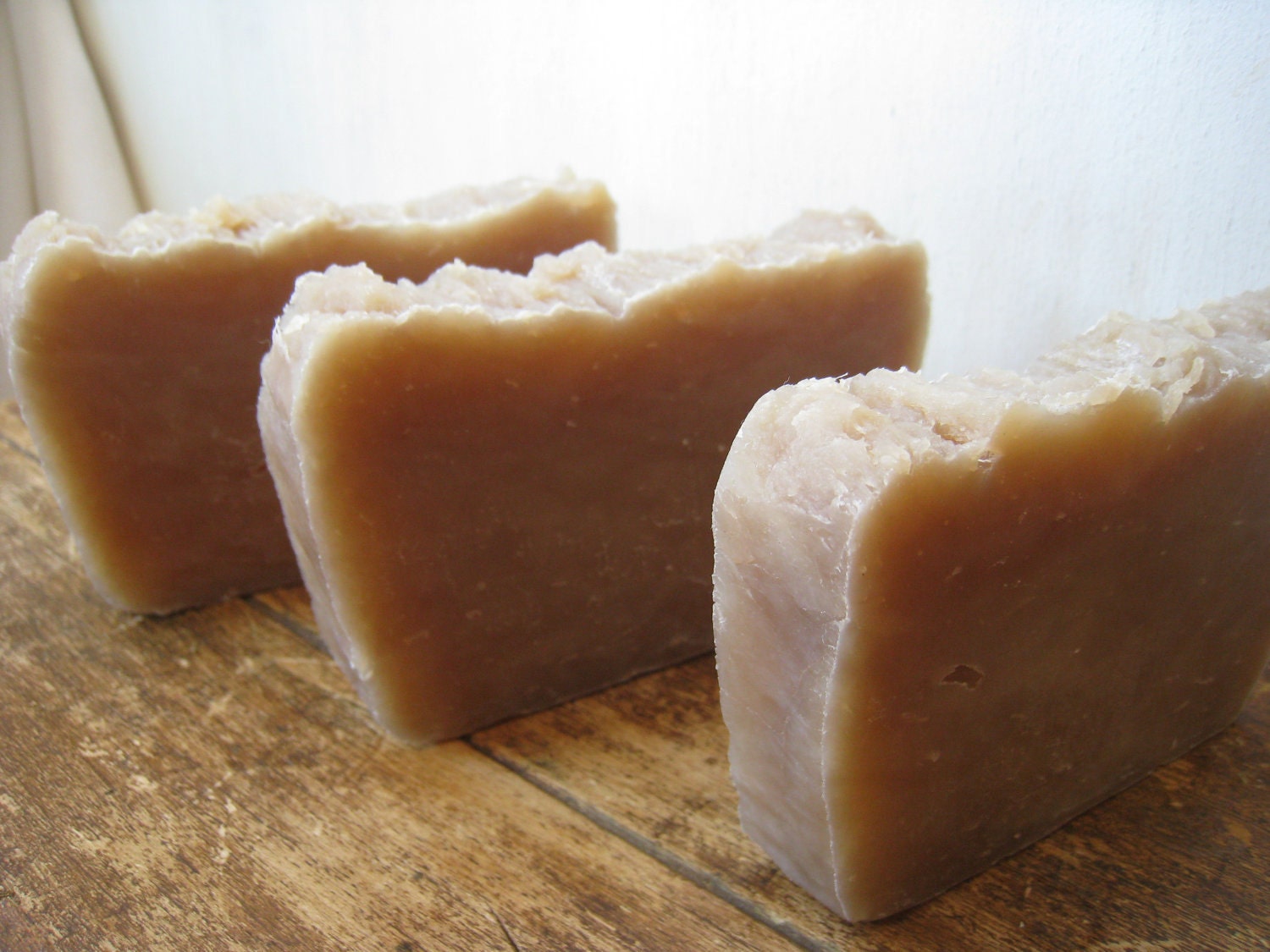
Finally, I found something that looked like it might work for me: all natural Shampoo Bars from Frugally Sustainable. (The first link takes you to the recipe to make your own, the second to her Etsy shop to buy them pre-made.)

I decided to give it a try in the middle of December while thoughts about Small Steps were fomenting in my head. Since I was working from home for a couple weeks, I figured if it all went badly and my hair was a train wreck it wouldn't matter - no one would see me! Lol.

When my shampoo bar arrived, it smelled amazing. (Several scents are available, and I chose Rosemary Mint.) I washed my hair every day, and definitely noticed a change in texture when I made the switch. It wasn't sticky, exactly, just kind of coarse - like I could feel the build up oozing out. Rather unappealing, but it only lasted about three days - far less than I'd expected. I also started using a Cider Vinegar Conditioning Rinse (1 part apple cider vinegar to 3 parts water, plus a couple drops of the essential oils of your choice [optional] for scent).

What a difference! The texture of my hair has completely changed since I started this new regimen. It is dramatically softer, no longer gets oily or frizzy, and is less prone to static. As an unexpected bonus, I discovered that it didn't need to be washed every other day (as had been my practice the last couple months). I use the cider vinegar rinse every other day but I now wash my hair only once a week! If you'd told me two months ago that I'd ever say that, I'd have told you that you were crazy! 

Needless to say, this Small Step has resulted in even more positive results than I expected and I'm very happy. For $6 a bar (which will last forever, even with my long hair since I only have to use it once a week), I don't expect to get into making my own any time soon - I'll buy a handful, stash them in the closet and be good for the rest of the year. As for the rinse, it works out to $1 a gallon... I think I can handle that!

Quick Tips:

Don't skip the rinse - there are lots of rinses out there, including herbal based ones that are equally cheap and easy to make if you decide you don't like the vinegar option, but the shampoo doesn't condition alone so make sure you pick some kind of rinse to use with it. Also, seriously consider investing two bucks in a spray bottle for your rinse. It's faster and easier than pouring it on, and you won't waste any!

Use the right shampoo for your hair type - I got the rosemary mint because I liked the scent, but probably should have gotten lavender because I have lighter hair. It doesn't really matter, unless you color your hair though.

Lather first - lather the shampoo up in your hands and then apply to your head. Don't rub the bar directly on your head - it's hard to spread out and work in, and you'll use way more than you need. You can buy little mesh soap bar nets for $1 that make it super easy to work up a lather, if that helps.

Wednesday, January 16

Small Steps: Dropping Mary Kay

Sunday I introduced my new blog category Small Steps. Although it happened last summer/fall, I decided that my decision to drop Mary Kay needed to be included in this category because it is was a catalyst for several Small Steps I've taken already.

Three years ago, in a time of serious stress and transition in my life, I was introduced to the “Mary Kay Opportunity”. Despite niggling concerns I couldn't really pin down, I decided to become a consultant, primarily because I desperately needed something that would let me set my own schedule without requiring costly or time consuming training to get started in. So I began both selling and using MK cosmetics.

This past summer/fall, however, I officially ended that period of my life. There were lots of reasons that I won't get into here (though if you are approached about the “MK Opportunity” I strongly encourage you to check out PinkTruth.com first). In keeping with the Small Steps theme, however, I'm going to focus here on the discord between the kind of life I want to be leading and selling/using MK.

Mary Kay, for all their advertising, is not a “green” company. The products are not cheap, and there's an endless push to buy lots of them (to the point that new formulas often don't work if not used in conjunction with the corresponding products). You have to dig to find the ingredient lists, and the products uniformly receive unflattering safety reports from Skin Deep. The company isn't honest with its consultants, and engages in business practices I do not want my money going to support. This was an area in my life that needed a change. 

So I resolved to use up my remaining product (because I hate to be wasteful), and started asking myself questions. 

What do I want in skin care/cosmetics?
What kinds of ingredients are safe, sustainable and healthy?
Do I have to be beholden to a company for this stuff? If people made their own cosmetics for centuries before modern companies took over the market, why can't I?

Since you can't take Small Steps without the right information, I'd like to share some of facts:
  • Although cosmetics are a regulated industry, many skin care and cosmetic products contain dangerous or unhealthy ingredients. (Check out Skin Deep for product assessments and industry info.)

  • Many products have all natural substitutes that are easy and inexpensive to make yourself or that can be purchased online from ethical, independent small businesses. (The sugar scrub I posted recently is a great example of this – why pay a spa or mall store big bucks for something you can do safer and more cheaply yourself?)

  • Quality matters. Toxins that seep through our skin from cosmetic and skin care products can be just as toxic and bad for us as eating food that's full of junk. Whether you make your own products or buy them, it's important to pay attention to the ingredients.

  • Finally, both personal experience and reading other people's experiences suggests that one of the biggest hurdles in switching skin care or cosmetic products is warped expectations! We are all so used to the consistencies, claims and containers of modern companies that initial forays into alternatives can feel odd just because they're so different. If you want to explore changes in this area of your life, go into with an open mind and make sure you're assessing products on their efficacy and “fit” rather than on how they compare to what you've used in the past.
This got long, so I'll end here, but stay tuned for info on the great alternatives I've found so far!

Saturday, December 29

Lemon Sugar Scrub

Thoughts of transitioning to natural, non-toxic personal care products have been often on my mind in recent months. Initially, it stemmed from reading about the debut of Mary Kay's latest skin care line. Although it took the company years to roll it out, neither consultants nor customers were happy when it arrived. They'd long been asking for something natural. Something completely free of questionable ingredients that would fit the rest of their healthy lifestyle choices. What they got was nothing of the sort.

It was enough to spark my curiosity - I blame the business major in me. Was this another case of bad management through obliviousness and arrogance? Could it really be that complicated to create quality personal care products at a reasonable cost? Surely with the centuries that people had been self-reliant before mega-industry took over production of every category of goods there had to have been simple, reliable recipes using safe and basic ingredients that could serve as models!

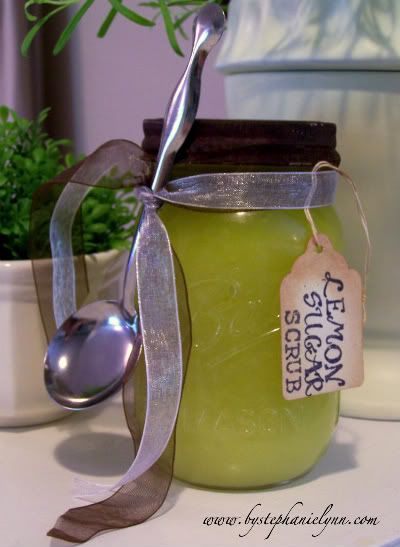
As it turns out, the interwebs are ablaze with creative and smart women who asked exactly that same question - and answered with a plethora of simple, healthy and fantastic products that fit the bill. I've been quite pleased with what I've discovered so far, and want to share one of my finds: Lemon Sugar Hand Scrub from Under the Table and Dreaming. It's simple, completely safe and natural, and (happily) cheap to make! It can be easily customized to a different scent if you'd like, as well.

I look forward to sharing what I learn as I continue to slowly transition our home off of as many toxic commercial products to homemade, customized, healthy options wherever I can.

(If you're a Pinterest fan, get a sneak peak at what's on my to-be-experimented-with list by following my Holistic Beauty board!)

Monday, November 19

Skin Deep

With lots of last-minute projects flying my way at work the last couple weeks, I've half-written about a dozen posts in my head... but haven't quite gotten as far as getting them written down here. Hopefully I'll be back on track this week!

Menu Idea Mondays are temporarily suspended; my isolation diet has kicked in, and I'll be lucky if I make so much as a batch of muffins between now and Christmas, so there won't be much new to post on that front! (Look for it to return in January.)

For today, though, I have a great resource to share with you: Skin Deep.


Skin Deep is a cosmetics database hosted by the Environmental Working Group, and it has just been completely overhauled and refreshed to carry the latest data and be easier than ever to navigate.

Why check out Skin Deep?
  • Many cosmetics are loaded with questionable (or downright nasty) ingredients that can cause allergic reactions, lead to toxic buildup in your body, and increase your risk of cancer. 
  • When standing in a store isle or shopping online, surrounded by options (and often limited information) it can be really hard to sift through it all. 
  • We are responsible for our health - who wants to sabotage it by laying your body with toxins every day when you don't have to?
  • Companies respond to $$$. The number one most effective way to improve the quality and safety of the products we buy is to vote with our dollars! Spend your money with companies making safe, high-quality products and more companies will (begrudgingly) start making their products conform.
Skin Deep is very user-friendly; you can see at a glance an overall assessment of a product's safety, or zero in on factors that are important to you (like allergens).


If you're gifting (or asking for) any kind of cosmetics or personal care products (shampoo, body wash, styling products) this holiday season, I encourage you to check out this database first!

I won't rant here about how the FDA and other government tentacles don't actually protect us or about how much junk they cheerfully let us poison ourselves with; instead I'll just say that there is tremendous power in being an informed consumer. Skin Deep makes it easy to exercise that power wisely - so hop over, check them out, and pass the word along.

[Note: I am in no way being compensated for this post, and there are no charges or registrations necessary to use Skin Deep. It's just a resource I appreciate and want to highlight so that others can benefit from it as well.]