Showing posts with label preparedness. Show all posts

Tuesday, September 12

An Unsought (But Critical) Opportunity

Photo Credit
It's not a secret that America's infrastructure has been borderline abysmal for an embarrassingly long time. (We earned a dismal D+ on The American Society of Civil Engineers' (ASCE) 2017 Infrastructure Report Card!)

These infrastructure failings have been equally rampant on the public (bridges, roadways, water/sewer/electric lines) and private (individual homes/property) fronts. How many people do you know who've bought a house - not even a particularly old one - and found themselves having to deal with the stress and expense of ancient appliances, inefficient and shoddily installed wiring/insulation/windows, or a dozen other things that somehow were never made it into the list of priorities monitored by code? Shall I tell you about the number of the grants I worked on related to public infrastructure that were requesting money to redo or replace projects funded by State/Federal money in the last twenty or thirty years?

With all that in mind, I can't help but think (as I watch the headlines scream about the destruction in the Caribbean, Houston, and throughout Florida) that we, as a nation, have a rare opportunity about to land in our laps. It's not something we'd ever have sought, but that's not an excuse for not rising to meet it.

If we're going to have to rebuild anyway, now is the time to do it RIGHT. 

 Put in the money now - on both the public and private levels - to lay down the infrastructure we want and will need in the future. Don't just replace what was lost - consciously choose to put something better in its place. Insurance companies and strategic tax law can make it not only possible but the easier, more attractive choice for homeowners to upgrade. Get Energy Star appliances, windows, insulation. Go solar. Put safe, affordable, Universal Design housing where there used to be McMansions or trailers. Communities overhauling public assets with taxpayer money should be required to justify their proposed investments with hard numbers demonstrating that they've chosen the option that will best serve the public moving forward over the long-term. Is it the most efficient they can get? The most durable? The most fortified against future disasters? Does it align with applicable best practices? If the answer isn't yes to every one of those questions, they need to head straight back to the drawing board or find private funding.

Do I have any faith that our government will do anything this logical or in the best interest of the nation and the public? Of course not. But I sincerely wish that for every person who looks at this mess and says "we need to talk about climate change" there would be another championing a serious national discussion on infrastructure. Because, honestly, there's a heck of a lot more we can do to improve the latter than the former... and one of the best roads to the kinds of changes climate change proponents want to see is through infrastructure changes in the first place!!

So no, we didn't want this - any of this. But since it's fallen into our laps anyway, let's at least be smart about it, okay?

Thursday, April 11

Evernote


Allow me to introduce you to my new favorite organizing tool - Evernote!

Being a visual/kinesthetic learner, I'm terrible at keeping information in my head. It all has to be written down if I want to find it/remember it again. Pinterest has been a God-send for me, because it lets me organize huge chunks of my life via pictures - quick and easy to reference and keep straight.

But Pinterest has its limits. Being image based means that it won't sort, track or help with anything not image-based. It also won't differentiate between parts of a page. So if you only want a portion of a given webpage, trying to copy it into a pin can be messy and inconvenient.

Evernote is to words what Pinterest is to images. Users can create "notes" (the equivalent of a pin on Pinterest) containing everything from a few words to an entire document. You title the note whatever makes sense to you and save it to a "notebook" (the equivalent of a Pinterest board). It is then accessible from anywhere you have internet, and fully searchable. This has been a God-send to me in tracking information and resources related to grants I'm working on; now I can keep those highly polished "blurbs" that can be reused/recycled from app to app in one central location and find them in seconds! 
 
Although I haven't used it yet, Evernote also has a people-tracking option that looks like it would be amazing for anyone whose job requires a lot of networking or people management. You can keep all your info on your contacts in one place (accessible from your laptop or smartphone) for quick reference. Business cards can be scanned in, meetings/calls can be tracked - all kinds of neat options!

Evernote is free, and versatile. It's proving to be a great tool for me. If you're a visual learner or need to handle extensive amounts of documents or word-based information, I recommend checking it out. 

What online tools have you found most helpful?

Tuesday, February 26

Please Make a Plan for Your Pets

Our baby girl the day we got her. She's
much fluffier and much rounder now!
When we got our sweet Nenya from the Glen Highland Farm Border Collie rescue, one of the things they asked us was to make sure we had a plan for our furry companions should anything happen to us.  I was reminded of that again when they sent us a link to their youtube video, celebrating all the dogs who found homes in 2012.

So I'd like to take a minute to pass along their request - no matter what kind of dog you have. It is heart breaking to read summaries of dogs up for adoption, explaining how they were the constant companion of their person until the diagnosis of a terminal illness or the move to assisted living. Suddenly without a home, and with the person's family unable to take them in for one reason or another, they are bereft. The lucky ones end up somewhere like the Glen Highland, with compassionate people to love on them and help them find new homes.

Our handsome Arthas, taking a nap under Daddy's hat,
Indiana Jones style.
Please make sure that you have a safety net for your pets in the event that something happens to you - no matter how young or old you are! Don't assume that your family members can or will take care of them - make sure you have an established arrangement with someone, and that it is clearly known or spelled out somewhere. If necessary, find a safe and loving rescue like Glen Highland and arrange to have them take in your furry companion if the worst happens.


Check out the GHF video of all the dogs they found homes for in 2012 (since youtube is being dumb and won't let me embed it here) at http://www.glenhighlandfarm.com/ghfdogs.htm.
(Warning: have a tissue on hand. It was so sweet I cried.)


Saturday, December 1

The Underground History of American Education

On a recommendation from my brother in law I picked up John Taylor Gatto's Underground History of American Education.

It blew my mind.

I cannot begin to describe how many disparate and complex subjects the author tackles, lining them up and connecting the dots between them. Faith, family, education, patriotism, business. This should be mandatory reading for every American.

Gatto respects the teachers who battle daily with the same goal he did - to genuinely help American students learn and thrive. But he breaks down the system, showing its poisonous roots and the myriad ways in which it crushes children, suppresses and fragments the family, and erodes Faith. Please make time to read it - we can't make a difference if we aren't informed, and this book brings together truths I have seen explored piecemeal dozens of other places. Together, the power and insight they bring is exponentially increased.

Although it would be impossible to describe here all the things that stunned me during the reading of this, one thing stood out above all else: your family is sacred. God designed families on purpose. That tiny core of structure - with all its defined roles, boundaries and supports - is the foundation of everything we need to be successful. 

There are so many things in this day and age seeking to destroy families. Many of us no longer even recognize or respect what the family was originally designed to look like - it's been beaten into us that the very things that will nurture and grow us are are restrictive, suffocating, to be revolted against. Don't buy it. Don't let anything degrade or eat away at the sanctity of your home. There is no more crucial fight than the battle to maintain a happy, content and intact home.

Okay. I'll get off my soap box now. But please read this. It will change you.

Monday, August 6

The First Rule of Homesteading


Since I first read it, I have appreciated the wisdom of Titus 2 and wondered why it does not feature more prominently in the church. I didn't actually hear the verse until I was an adult and reading about homesteading. The reason I ran into there, I've found, is because it speaks to the very soul of the independent, self-sufficient lifestyle.

The first rule of homesteading is to share what wisdom you know generously and receive wisdom from others with thankfulness and modesty.

I believe this is why so many homesteaders, though up to their eyeballs in their own projects, are compelled to blog – to pass along what they've learned the hard way so others don't have to. It is why I am tremendously grateful to have neighbors down the road (who have kids my age) that have taken us under their wings.

We spent three hours yesterday morning tramping around in state forests, being introduced to orchards, deer trails, old quarries and berry patches. It's a bad year for apples here, unfortunately, but the black cap berries are ripening and a handful of hickory nuts are already dropping from the trees. We're learning to look for and identify these precious resources and scoop up what we can. God willing, next year we'll be able to skip buying bushels of apples and pints of berries, collecting them free from land no one else bothers with. It will save us hundreds of dollars – money that can be invested in garden infrastructure and other essentials.

We'll only know how because our self-taught neighbor took it upon himself to offer his valuable knowledge to the next generation. To others of the same mind, with the same values. And because we were willing to listen.

We are doing no favors to the current generation of children coming up through school with collaborative learning techniques and find-it-yourself teaching methodologies. We rob them of the understanding that their elders have accumulated wisdom from which they could learn if only they'd respect it, look for it and ask.

In the era of youtube and google, there's something startlingly wonderful about being able to walk beside another human being, seeing and touching the object you're learning about, asking questions and getting answers to your specific situation in real time. The longing for that personal touch echoes through the blogosphere, whether you read about homesteading, crafting, parenting or anything else.

We are all good at something, have lived through something or are passionate about something that someone else is trying to learn. We still have nearly a month before summer gives way to fall, school starts back up and the pace of life increases again (if it ever slowed down)... Will you consider looking around for opportunities to share what you know? Whether by blogging, inviting someone over for tea, or signing up to teach a course through your local extension/ continuing ed program, consider sharing what you know. Someone out there desperately wants to learn and would be so blessed.

(Note: Did you know that you don't have to have a degree in something to teach an extension/ continuing ed course? Usually a passion for your subject and a reasonable course outline is all it takes!)


Friday, July 6

Efficiency

I think, sometimes, that if science had been taught differently when I was in school I would have been fascinated by it. Math, too, for that matter.

For example, have you seen one of these? Appropriately called Kill A Watt, it's a nifty little device you plug into the wall and then plug any electric device into to find out how much energy said appliance is pulling. If you leave it there for several hours, it will give you an average pull, allowing you to extrapolate how much it costs to run a given appliance per day, month, year, etc.

That information, of course, allows you to make smart choices about what to replace and when. For example, we plugged in the monstrous fridge that came with our house and found out that it would be in our best interest to replace it sooner rather than later! On the other hand, our equally ancient chest freezer is barely pulling anything so there's no point in replacing it until it dies a natural death.
 
When we were apartment dwellers, there was depressingly little we could do about our electric bills. The best we could hope for was to plastic the windows over in the winter and set the thermostat to the most restrained temperatures feasible.

Now that's we're homeowners, we're turning keen eyes to a push for efficiency in our home. Because really, who doesn't like efficiency? It's green, it's responsible, and in the long run it frees up time and money for other projects. Did you know that it's more cost effective and financially smart to put up to $100,000 into improvements on your property than to invest a penny in the stock market?

I'll be honest and say that number blew my mind. It also gave me fresh motivation to dig into an exploration of what is available to us and a good use of our efforts. Summer is an ideal time to evaluate and increase the energy-smartness of your home/property. The warm (and hopefully dry) weather allows outside projects and spillover space for messy indoor projects. It's a particularly good time to tackle winter preparations (like insulating walls or fireplace cleaning/ repairs) since most of the world won't start thinking about them until fall at which point the waiting lists abruptly get long and more expensive. 

If you don't already have some efficiency-improving projects on your summer list, might I encourage you to pick at least one to try for? Even simple steps can make a big difference!

Where you have seen the biggest bang for your buck in home efficiency improvements?

Wednesday, May 16

One Minor Tactical Oversight

I recently read (via audio-book) Now You See It by Duke University Professor Cathy Davidson. It was a richly layered book, discussing overlapping themes in the science of attention, educational paradigms, modern technology and global business.

Ms. Davidson made some excellent points, and certainly provided abundant food for thought. I won't get in to them here, but the book is well worth reading if you have the opportunity.

Despite the many valid ideas, it was a single assumption that she spoke aloud only once that most stuck with me: the information revolution is irreversible. This was a linchpin for many of her arguments - we need to embrace new technology because it's not ever going away. What does it really matter if we let go of a few clunky skills our machines have made obsolete?

In theory, it's a perfectly reasonable point. Except for one minor tactical oversight: it isn't true. The technology on which we so willingly depend is not guaranteed to us in perpetuity.

In fact, it's not nearly as stable and secure as most of us like to believe. Shut off the power for as little as a few days and you can watch the world begin to crumble. Remember the panic that people registered just a month or a two ago when it was thought that excessive solar flares might interfere with satellite access? Better still - think of the countries restricting access to the Internet and other technologies Western countries take for granted right now.

Or, God forbid, a One Second After scenario hits and an EMP shatters every electronic device we have. What happens to the young adults who have none of those "obsolete" skills to fall back on? Who can't read a map, use a compass, do basic math without a calculator or even know how to use a card catalog to look up survival books in their library? Let's not even think about how their brains are so wired for electronic reading that they'll struggle to read real books even if they find them! (See The Shallows for more on that.)

So while I appreciate the passion and good intentions of people like Ms. Davidson, I cannot in good conscience agree to let so many precious skills be rendered obsolete. It costs us nothing to learn the old skills alongside the new and in a crisis those skills could save countless lives. Let's not cheat ourselves out of a Plan B, shall we?

Tuesday, March 27

What's Your Collections Policy?

At home this month life is all about spring cleaning and packing. At the museum, one of my projects is revisiting and revising our collections policy. The combination has had me thinking about what my personal" collections policy" is for my home.

Established logic in the museum world is that collections should be built around items that are unique and/or inherently valuable. Anything you cannot properly preserve, care for or display is not a good addition; it only leads to neglect and unnecessary expense - for those items, or for something else of value.

The same is true for our homes. Clutter costs. It costs money, time, energy, and unnecessary stress! Here are a few guidelines that have shaped our "collections policy":

1. Stop the paper clutter before it comes in the door.  We currently subscribe to only two magazines; when we're done reading them, they get recycled or shared with someone else. Mail gets sorted immediately upon coming through the door - junk gets shredded, important stuff has a designated spot to await being addressed as promptly as possible. Receipts and other miscellanea are treated the same.

2. Prevent wardrobe sprawl. If we aren't careful, its easy to find huge amounts of space and money tied up in wardrobes bigger than we need or can really appreciate.  Look for pieces that fit well, will last and don't duplicate what you already own. Keep the best, weed out the rest.

3. Shop less. The absolute best thing we have done (though we didn't start doing it intentionally) has been to go shopping less often. Get picky on your purchases! Even cheap clutter adds up, often most heavily in things like time and peace of mind. As much as possible, say "no". Things you are going to buy, try to buy well and once.


Wednesday, March 14

Slightly Morbid Spring Cleaning

At the risk of sounding a bit morbid or completely mundane, I'd like to talk about paperwork. Specifically, the kinds of legal and official paperwork most of us try to avoid: wills, titles, certificates, insurance policies - all the stuff that should come with complimentary bottles of Excedrin. 

Why am I talking about such a bleak subject? Because right about now you're  likely in Spring Cleaning mode. You have your sleeves rolled up and your spirits high (be it from the sunshine or all the cleaning solution fumes). You're also handling all your latest financial information, compliments of tax day in April. That combination lays the perfect foundation for a little much-needed housekeeping in your filing cabinet.

Please don't exempt yourself from this just because you're young, in good health, or assume you don't have any assets worth worrying about! 

As I try to explain to people when discussing succession planning, any one of us could get hit by a bus tomorrow - physically or metaphorically. Serious illness, injury, death or the dawn of the zombie apocalypse can happen to any of us at any time. Preparing to handle these potential crises as smoothly as possible is one of the best ways a person can love on and protect their family. 

It shouldn't surprise anyone to learn that laws are written to benefit the government rather than to reflect common sense. For your sake and your family's, you need to have your ducks in a row and not leave yourselves in the greedy, incapable hands of government!

Most of us drastically underestimate the legal complexity of what should be basic documents, as well as the amount of time and documentation required to update or replace crucial items like Social Security cards and certificates of marriage or birth. Take it from someone who knows: the whole system is a mess! It will take longer than you think, and God help you if you have to do it during a crisis or after someone has been incapacitated.

So where do you start?

1. Get Your Documents in Order. The graphic above is from the Wall Street Journal. If you click on the picture, it will take you to the larger, more readable graphic. You can also read the accompanying article here. Both are great starting points for figuring out what you need. Depending on your situation, you may be able to do most of it yourself with the help of free templates online. If your situation is more complex, consider investing in the services of an attorney or other professional who can help you navigate the system effectively.

2. Simplify Your Life. When is the best time to divest yourself of stuff and commitments you don't need/ use/ benefit from? Right now! Whether you're 26 or 86, use this process as a positive occasion to evaluate your life. If you find dead wood or messy, untied strings get rid of them! Focus on what's important and living well, and lose the rest. You're putting in the elbow grease to clean, sort and plan right now anyway so make the most of it!

3. Amplify Your Spring Cleaning. Two of the biggest challenges people often face in a crisis are clutter and disorganization! Shred or burn the boxes of old checks or receipts you'll never need. Properly file and clearly label important information like recent tax returns, mortgage papers and insurance policies. 
Compile critical information into central, easy to reference files or lists. (Need help? You find comprehensive and thought-provoking lists online or end-of-life planning books at your library. Whether you're planning for death or an apocalypse, you'll find much of the basic documentation similar.)

4. Talk to Your Family. Clearly, crises are not anyone's favorite topic of conversation. Depending on your family dynamics, the discussion can get heated and bring up old wounds, fresh resentment and buckets of guilt. But better to deal with all that mess now than in the middle of a crisis! Start slowly if you have to, but keep at it until everyone else gets on board (or at least knows what you're doing, whether they like it or not). Remember, even if they'd rather avoid thinking about the potential for a crisis altogether, this is something you're doing out of love and because it's your responsibility. The peace of mind on the other side of this messy, headache-inducing process is priceless.

Is your filing cabinet ready for the zombie apocalypse?

Thursday, February 16

Don't Talk to the Police

I was rather floored when I saw this, but I am so glad I did! Each section is about 20 minutes long but PLEASE make the time to watch. They could save your life!


Scary aren't they?


Thank God for the Constitution, Bill of Rights, and Americans not afraid to tell the truth!

Wednesday, February 8

Clean Living & Prepping Resources

One of the things people often find when they start to weed chemical laden products and unhealthy food from their lives is that local grocery and big box stores quickly become unfriendly places to shop.

Even if your local store carries clean food and green products, the selection is usually limited and the prices can be prohibitive. Those with an eye towards preparedness also tend to be frustrated by the flimsy, bulky or otherwise unhelpful packaging.

Not surprisingly, then, the most common questions on healthy eating websites revolve around where to find real food and how to afford it. 

While there are many places to source from, I've found that the search doesn't end once you've found a few that work. The more you know, it seems, the more you learn. I've just recently come across two new resources that I'd like to share. If you're looking to buy clean or buy in bulk you'll love these!

Vitacost is a website I found via Modern Mrs. Darcy. Featuring a huge selection of food, cleaning products, dietary supplements and more for half what they cost in my local grocery store (if they're even available), Vitacost consistently runs coupons and specials that can make for amazing deals. I bought a six months supply of my favorite all- natural dish soap, a year's supply of Mrs. Meyer's household cleaner (as a concentrate which is a huge space saver) and a pack of the best sponges I've ever used. Total cost with shipping after coupon? $12. Although you need to know your prices (some of the nutritional supplements cost the same as they did on other websites), this can be an incredible money saver. Even the standard shipping was fast - I had my product in less than four days. I will definitely be ordering from them again.

Hillcrest Foods is a bakery distributor with an extensive catalog that serves multiple states across the northeast. Bulk wheat, oats, honey and other staples can be picked up straight from their warehouses for excellent prices. They carry a wide range of products including nuts, cheese and dairy as well. Their entire catalog can be down loaded from their website and pricing is available by phone or email. They were friendly, professional and clean and I am delighted to have found them. Anyone who's ever bought 50# of honey from online distributors can appreciate the huge cost savings in shipping charges alone! Tip: Hillcrest has a whole section of gluten free foods! Par-baked, unbaked, bulk - if you're cringing at the costs of buying gluten free food locally or worried about what you'd do if your local supply got cut off in an emergency, check out their offerings.

Not in the northeast?  Every corner of the country has bakery distributors. It might take a couple tries to find a good one, but keep your eyes and ears open and don't be afraid to ask around. The results can be well worth the effort!


Wednesday, January 18

Timely Lessons

Over at the Uncataloged Museum blog yesterday a guest poster shared the lessons she was taking away from the process of leaving her job as a historian and curator. Given a month's notice that her job - along with many others at her financially strapped museum - was being eliminated, she dug in to the challenging but surprisingly rewarding task of wrapping up and handing off her responsibilities.

As she evaluated her time in that position and what she was leaving behind, she made notes to herself on what her team had done well or poorly. What made the top of her list?
  • To set and stick to priorities, ruthlessly 
  • To cultivate better digital housekeeping habits 
  • To always prioritize work on critical documents 
  • The true potential of the work blitz 
  • The hidden costs of feeling overwhelmed
     
These lessons rang very true for me; I feel like I have been having conversations with people on variations of these themes for a while now. (I've gotten myself locked out of an online account about four times in the last six weeks... clearly my digital housekeeping habits need some work!)

As for those critical documents? Whether it's updating work policies to reflect current challenges or something on the home front like revising your will and insurance policy, most of us have something we're putting off that would bite us if push came to shove tomorrow.

My favorite of her suggestions? The work blitz!

1. Pick one thing that really needs attention - whether it's a long unfinished project, a catastrophically messy office or a the research/prep for something new.

2. Clear your schedule and turn off your phone for a day, maybe even two. Kidnap - I mean invite to join you - anyone you need to help you complete the project.

3. Throw all your energy into blitzing that one thing until it's done and can be wiped off your list with a flourish!

Did any of those lessons strike a chord with you?

Thursday, September 1

Trial Run


The interwebs abound this week with blog posts about what people learned (or should have) from Hurricane Irene.

Locally, I know several people who found themselves unable to get to work and a few businesses/ services closed for a day or two because their employees were stranded on the wrong side of the river with no way to get across. Even after the weather had cleared and the sun was shining, our electricity flicked off and on erratically as crews removed trees from power lines. Thirty-six hours post typhoon we got a boil-water order.

Of the most impact to me personally was news that if NYC had been hit hard my husband and his unit would have been called up and had to go down there to assist with evacuation efforts. Fortunately, they were able to function on just volunteers this time through, but it made me think.

I tend to consider myself pretty prepared, but this trial-run provided me with some valuable feedback with which to evaluate and improve my preps and plans.


Menus My stove-top stayed on, but every time the power flicked off my oven went out. I am thankful I have a collection of skillet recipes, but I realized that I need to be more proactive about keeping crackers and other dry, ready-edibles in the house.


Escape Routes Our plan has always been to shelter in place unless evacuation became truly impossible to avoid. But having seen so many bridges out and portions of the major highways completely shut down has forced me to explore alternative bug-out locations. If “out” is open in only one direction, how do I get somewhere safe? Something to think about.


Me, Myself and the Dog I've always known that there's a good chance emergency will strike while my husband is deployed; I'd never considered that he might be home and deployed because of the emergency. Honestly, a little heart work is necessary here because I'd be pretty pissed if he had to go take care of strangers somewhere like NYC sure to be full of looting, rioting and people who've never bothered to prep at all (reference their complete melt down last winter during a snow storm for the basis of my assessment) rather than here with his family and friends. Beyond that, I clearly need to address our communication plans since I could be forced to evacuate while he's gone and it would be important that we be able to relay valuable info despite cell restrictions. I'd been trying to avoid the third-party plan, but I may have to bite the bullet and make it happen.


Like a Good Neighbor Friends of ours have a three month old baby; the father works with my husband. God forbid they got called up, the poor new mom would be by herself – all their local family is on the other side of the river! Although I'm used to keeping half an eye out for my physical neighbors, this was the first event that made me consider whether or not I need to expand my view when it comes to thinking of people to check on or offer to assist.


Procrastination Is A Suicide Installment Plan A slightly more impressive version of the “don't put off till tomorrow what you can do today” idea, I picked up this line in Mary Kay training believe it or not! It really stood out to me as the most valuable lesson from this storm, though. Laundry, food prep, grocery shopping – life if meant to be lived, certainly, but letting chores and seemingly mundane tasks pile up simply because we assume we can always do them later could come back to bite us badly in an emergency when everything instantly gets harder or takes longer.


Those lessons give me plenty to work on right now. What did you learn?

Sunday, April 24

Take No Prisoners

When Eric and I first bought our wheat grinder, we went small. It was an experiment and we didn't want to sink too much money into it in case it went badly.

But it went smashingly well. We LOVE grinding our own flour, for the cost savings, nutritional benefits and preparedness aspect.

Unfortunately, my poor little grinder was not really intended for the high volume of wheat we've put through it. It still works, but we've been debating for some time now the need to replace it. I did lots of research and knew exactly what I wanted, but couldn't really justify the expense. Finally, Eric decided it was time and ordered a Country Living Grain Mill. I was madly excited and couldn't wait for it to get here.

Check this out!

This thing does not take prisoners! The flywheel is very heavy and designed with that channel in the middle so you can run a belt through it and run it off a motor or attach it to a bike for powered grinding. The grinder is heavy duty enough that it has to be bolted to a counter to be properly operated.


Obviously, since we're renting and not allowed to bore holes into the counter top, we had to improvise. Eric made a base to bolt the grinder into and we clamped that to the counter. Grinding has become a whole-body exercise, but light years faster! I also have no doubt that this will last us the rest of our lives. Short of a nuclear explosion, I don't see this breaking down or wearing out.

If you're thinking about a grinder, I highly recommend this one!

Cast Iron

One of the things sitting on our eventual list of things to buy was a cast iron skillet. We found one at a local antique store recently for $14 dollars. It was in need of a little love, but having read about revitalizing skillets in a cookbook a while back and seeing this great guide we decided to give it a shot.


Here's our new (to us) skillet, in need of a little love.


After a good scrub-down with steel wool, I filled it with salt and threw it on the stove. It was fascinating to watch the salt leach the rust out, turning a brownish grey color, and to find the skillet much improved when I finally dumped the salt out and scrubbed it down again.


After that, I put it back on the stove, over low heat and periodically oiled it, allowing the oil to bake into the pores of the iron to give it a nice, naturally non-stick finish. (Sorry, failed to take a "done" picture yet...)

I haven't had a chance to use it yet, and it may need a little more oil, but I'm very pleased with how well it has turned out so far and the knowledge that we have one more thing off our "be prepared" list!

Dehydrating Eggs

I mentioned in a previous post that I'd found a tutorial online for dehydrating eggs. This was really exciting, because buying them already powdered is expensive and usually includes unnecessary (possibly unsafe) preservatives. I'd much rather use fresh eggs from the local farm and do it myself as I have a few extra bucks here and there now that I know that's an option. It was actually a lot easier than I expected.

First, start cracking eggs. As a standard practice when using eggs for anything, I recommend cracking them separately into a small dish before combining them or adding them to a recipe. It has to potential to save you a lot of grief and wasted ingredients if you get shell fragments in it or find any unexpected quality issues.


Next, beat the eggs well.


If at all possible, keep a furry supervisor on hand to ensure quality and assist with cleanup. Border collies are a good choice, and usually volunteer as soon as they see eggs coming out of the fridge.


Pour the beaten eggs into the flat trays that come with your dehydrator (the ones you'd normally use for jerky). Somewhere in the neighborhood of six eggs will fit in each tray. I only did four my first run and definitely had room to spare.


Set the temperature on your dehydrator to 160* (or whatever the equivalent is on your machine). How long drying takes will depend, of course, on several factors but I let mine run all afternoon and overnight and that was more than enough.


Depending on how thickly you poured them in, the eggs will pop out as either a hard, flat sheet or as crumbles. (Mine were poured thinly and came out at dark orange crackly crumbles.) They will be a smidge oily to the touch, but that's okay.

Powder the crumbles in your blender or food processor and store them in an airtight container. To use, combine 1 tbsp powder with 2 tbsp warm/hot water and let sit briefly. I have not yet baked with mine, so I'll post notes in the future if I find any helpful tips, but I encourage you to give this a try! It was quick, easy and brings a great deal of peace of mind.

Thursday, April 21

For Your Bookshelf


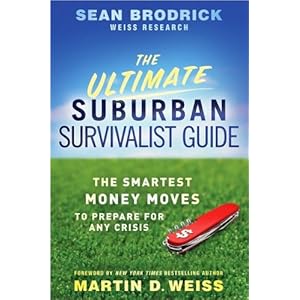
This should be a must - have for everyone who cannot (or will not) include "moving to a farm" on their emergency preparedness to-do list! For many legitimate reasons - jobs and health needs being two of the biggest - not everyone can abandon suburban living, but that's no excuse for not being wise and prepared to handle the waves of social and economic instability that have become standard fare these days.

Brodrick covers everything from investing wisely and easy ways to reduce your dependence on gas, electricity, etc. to building networks with your neighbors and how to prepare for any disaster - large or small - without breaking the bank.

The author's positive tone and fundamental practicality set this book apart and I highly recommend it!

Wednesday, February 23

One Second After

One second after an EMP hits, it will be too late to ask the two questions that matter most: What should we have done to be prepared, and why didn't we do it?
Epilogue, One Second After


I believe it is a testament to human ingenuity that we can write and read novels that speak hard truth more effectively and soberly than a non-fiction manual ever could.

I wept more than once over these pages, forced to viscerally confront realities that all my survival- minded preparedness reading has made evident, but previously allowed me to keep at arm's length.

An EMP - ElectroMagnetic Pulse weapon - could, in a split second and without warning, throw the entire United States back into medieval times, without hope for true rescue, restoration or recovery. Over 80% of our population would die in less than a year and we would be faced with horrors few of us can actually comprehend. The threat of such an attack already exists. We should already have been preparing for it for years.

Make time to read this book; keep some tissues nearby. It will change how you look at the world. Permanently.

Wednesday, February 9

Americans at Risk


I've just finished reading one of the best books on preparedness and emergency planning that I've ever encountered. Find it and put it on your reading list - it is a must have!

Written by a physician with active experience in disaster preparedness and response, it brings to the table a refreshingly genuine call to action that it unmarred by political aspirations or partisanship.

In a unique turn, Dr. Redlener does not focus on stashing a room full of rice and beans or getting off the grid. Instead, he focuses primarily on mega-disasters (think Hurricane Katrina or 9/11) and uses them as a framework to address both large and small-scale challenges and opportunities, from a crumbling national infrastructure to the psychology behind Americans' wide-spread failure to have basics like three days of food and a flashlight with working batteries on hand in their homes.

Although it does contain some solutions and suggestions, this is not a how-to book. Instead, it speaks to the need for Americans to understand how vulnerable and unequipped our nation really is and why.

Especially enlightening were his disaster scenarios, all real-to-life, demonstrating the far-reaching impacts of a mega-disaster and the limitations of our current response capabilities. We assume that in an emergency help will come and someone who knows what they're doing will take over, despite the demonstration many times that real life often doesn't work that way. Each of Redlener's scenarios illuminates the many facets of emergency planning that daily go overlooked or unconsidered and brings to light ways we can act as individuals and communities to improve our standing before we find ourselves in such an untenable position.

This is a reader-friendly but high-impact read. Please check it out!

Sunday, January 30

Cast Iron Skillets


Last summer, I noticed a glaring gap in my cooking abilities: nearly all of my favorite recipes require baking in the oven. In 90+ degree weather, turning the oven on is less than ideal!

I was reminded of this problem recently while reading a survival blog. Even if we were able to get a backup heat supply with which to function should our apartment complex be without power (not an unrealistic or uncommon event in winter by any stretch), we could survive on peanut butter or applesauce or whatever else I have canned eaten cold, but in the bitterly cold temperatures we've had recently, it would be pretty miserable. It would also be entirely avoidable!

So in my latest stack of library books, I brought home a book on cooking in a cast iron skillet. I was little disappointed that some of the recipes were designed for stove-top-to-oven transitions, but there were many great ideas for simple hot meals that could be adapted to any open cooking surface.

In an emergency situation, being able to offer sustenance and comfort to those around us is not a frivolous concern. It will be a very real and essential task that can make the difference between sludging along in despair and regrouping, connecting and moving forward. This is certainly only a first step, but it keeps in view two important questions. Are you ready? What have you done to prep this week?